



A split-stage engine utilizes a changing gadget to disengage the beginning twisting once the engine gets to 75% of its evaluated speed. Albeit this type has a straightforward plan which makes it more affordable for business use, it likewise has low beginning forces and high beginning flows.
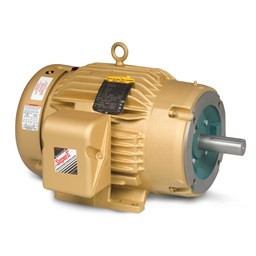
The capacitor turnover CEM2394T engine is essentially a parted stage capacitor engine with a capacitor in series with the beginning twisting to make really beginning force. This engine is more costly by virtue of the exchanging and capacitor prerequisite.
An extremely durable split capacitor engine has no gazing switch. For this sort, a capacitor is for all time associated with the beginning winding. Since this capacitor is expected for consistent use, it doesn't give beginning power, hence beginning forces are ordinarily low.
These CEM4109T engines are not suggested for weighty beginning burden applications. In any case, they truly do have low beginning flows, calmer operation, and higher life/dependability, consequently pursuing them a decent decision for high cycle rates.
The capacitor start/capacitor run engine has both a beginning and run capacitor in the circuit. The beginning capacitor is changed out once accomplishing fire up. This kind of engine has a higher beginning, lower stacked flows, and higher effectiveness. The disadvantage is the cost that is expected for two capacitors and an exchanging gadget. Unwavering quality likewise plays a component by virtue of the exchanging instrument.
The three-stage enlistment engine is twisted for three-stage substituting voltage. These are the easiest and most tough electric CEM4110T engines that anyone could hope to find. Stepper engines are DC engines that produce gradual advances. In the event that you require shaft situating to be predictable, stepper engines might be a choice.


